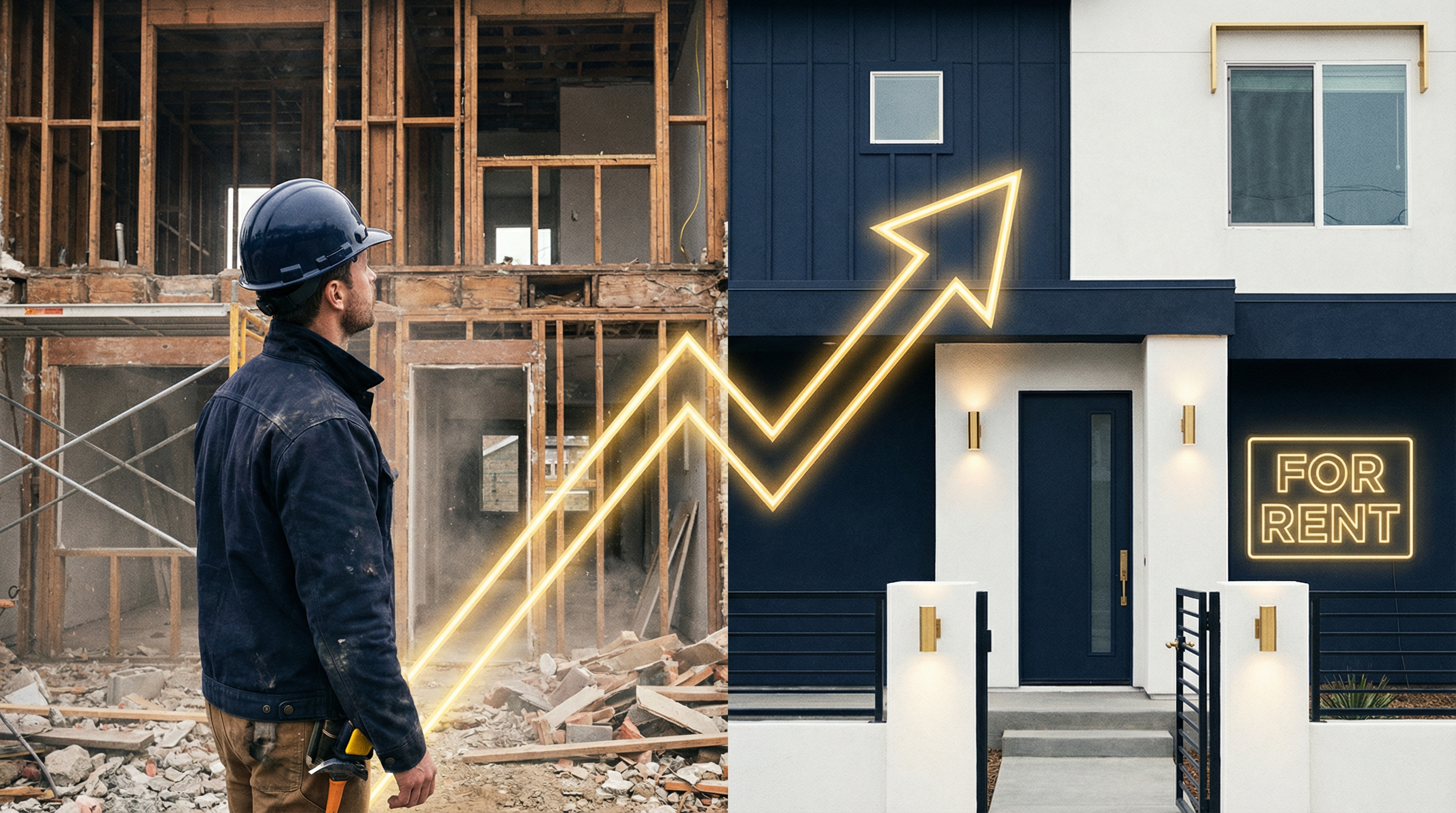
What is the Bridge-to-DSCR Strategy?
The strategy involves two key loan products:
- The Bridge Loan: A short-term (12–24 month), interest-only loan used to acquire and renovate a property quickly. Bridge loans are asset-based, meaning they focus on the property's value, not your personal income.
- The DSCR Loan: A long-term (30-year fixed) rental loan used to refinance the bridge loan once the property is renovated and tenanted. As we covered in our Complete DSCR Loan Guide, this loan qualifies you based on the property's rental income.
You use the bridge loan to buy and fix the property, then use the DSCR loan to pay off the bridge and hold the property as a long-term rental with permanent financing.
Phase 1: The Bridge Loan (Acquisition & Rehab)
This is the "Buy" and "Rehab" phase. A bridge loan is the ideal tool here because it offers two things conventional loans don't: speed and flexibility.
| Bridge Loan Feature | Why It Matters |
|---|---|
| Fast Closing | Bridge loans can close in 10–21 days, allowing you to compete with cash offers. |
| Covers Rehab Costs | Most bridge loans will finance up to 100% of the renovation budget, held in escrow and released as work is completed. |
| Based on After-Repair Value (ARV) | Lenders will often loan up to 70–75% of the property's future value after renovations, not its current purchase price. |
| Interest-Only Payments | Payments are low during the rehab phase, preserving your cash flow for the project. |
Phase 2: The DSCR Loan (The Refinance)
This is the "Rent" and "Refinance" phase. Once the property is renovated and you have a signed lease, you can apply for a DSCR loan to pay off the bridge loan. The key here is the new appraisal.
Because you've renovated the property, its value is now significantly higher than what you paid for it. The DSCR lender will base their loan on this new, higher appraised value.
Example:
- Purchase Price: $200,000
- Rehab Budget: $50,000
- Total Project Cost: $250,000
- After-Repair Value (ARV): $350,000
A DSCR lender might offer a cash-out refinance at 70% of the ARV, which is $245,000. This is enough to pay off your entire project cost, leaving you with a cash-flowing rental property and your initial capital back in your pocket, ready for the next deal.
Find the Right Bridge & DSCR Lenders
We have a network of specialized lenders for both sides of this strategy. We can help you secure the bridge loan for the acquisition and line up the DSCR refinance from day one.
Why Not Just Use a Conventional Loan?
Conventional loans are not designed for this strategy. They have mandatory seasoning periods (often 6–12 months) before you can refinance, they don't typically fund rehab costs, and they qualify you based on your personal DTI, which can limit how many properties you can do. The Bridge-to-DSCR strategy uses commercial lending products designed for this exact purpose.
Frequently Asked Questions
What is the Bridge-to-DSCR strategy?
It involves using a short-term bridge loan to acquire and renovate a property, then refinancing into a long-term DSCR loan once the property is stabilized and tenanted. It is the modern version of the BRRRR method.
How long does a bridge loan last?
Bridge loans are typically 12 to 24 months in duration. They are interest-only, keeping payments low during the renovation phase.
Can I refinance a bridge loan into a DSCR loan?
Yes. Refinancing a bridge loan into a DSCR loan is the most common exit strategy for buy-and-hold real estate investors. The DSCR loan pays off the bridge and provides permanent, long-term financing based on the property's rental income.
Bottom Line
If you want to grow your rental portfolio efficiently, the Bridge-to-DSCR strategy is the most powerful tool in your arsenal. It allows you to recycle your capital, build equity quickly, and scale your holdings without being constrained by personal income verification. Contact us to discuss how we can implement this strategy for your next acquisition.